Manila: Fabulous FEU Art Deco Walking Tour
03 August 2007
Throughout his college days, Tutubi passed by Espana and Lerma streets on his way to school and each time got amazed at the unique letters used in the Far Eastern University building visible from Quezon Boulevard. The name of the university emblazoned bearing a likeness to baybayin (wrongfully called alibata), the ancient script of forefathers of present day Filipinos.
This time, Tutubi joined a tour of the sprawling campus of FEU: its art deco gems, works of various national artists and a bonus trip to nearby Gota de Leche.
Tutubi arrived at FEU with J, and RM (of Project Manila) in J's black altis but their guide for the day, Ivan ManDy, didn't notice Tutubi and waited for him to arrive even if he's already inside taking some pictures.
The tour started with Ivan becoming "historical" again narrating various events that led to the introduction of Art Deco architecture in the Philippines in the roaring 20s.
 One of four bas relief by noted Italian sculptor Francesco Monti. Other works include Quezon Memorial, Metropolitan Theater, Sto Domingo, Bonifacio Monument, Manila Central Post Office and University of Visayas
FEU campus is a complex of art deco buildings by Pablo Antonio with Nicanor Reyes Hall, the Girls High School (now called the FEU-East Asia College) and Boys High School (now called Law Building).
 Nicanor Reyes Hall, with the baybayin-looking letters


 Statues by National Artist Vicente Manansala
Merriam and Webster defines art deco as "a popular design style of the 1920s and 1930s characterized especially by bold outlines, geometric and zigzag forms, and the use of new materials (as plastic)." (Etymology: French Art Déco, from Exposition Internationale des Arts Décoratifs et Industriels Modernes, an exposition of modern decorative and industrial arts held in Paris, France, in 1925)


Chapel designed by Felipe Mendoza

Stations of the Cross inside the FEU chapel by National Artist Carlos "Botong" Francisco
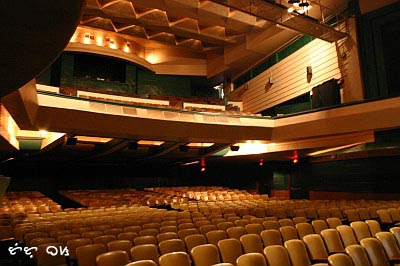
FEU auditorium
 Mural by Antonio Dumlao
 Noticed the letters looked like Baybayin (alibata), the ancient script of the ancestors of Filipinos that Tutubi uses to sign his photographs?
 Owing to the exemplary conservation work done by the university, UNESCO awarded the university the UNESCO Asia-Pacific Heritage Award in 2005.
During World War 2, the campus was used as a concentration camp by the Kempeitai and where Josefa Llanes Escoda, the founder of the Girl Scouts of the Philippines, was executed.
After the FEU tour, Tutubi suggested visiting the nearby Gota de Leche building on S.H. Loyola St (formerly Lepanto), a request acquiesed by the gracious guide.
The university produced many outstanding graduates in it's existence but the greatest of them all, according to Tutubi graduated in 1967 with a degree in accounting.
~~~~~~~~~~~~~~~~~~~~~~~~~~~~~~~~~~~~~~~~~~~~~~~~~~~~
Tutubi's own eyes saw these other Art Deco Structures in Manila and other parts of the Philippines:
1.Jai Alai Fronton on Taft Avenue (Welton Becket, demolished 2004)
2.Avenue Theater (Juan Nakpil, demolished 2006)
3. Metropolitan Theater (The Met)(Juan Arellano, undergoing renovation)
4. Perez-Samanillo Building on Escolta (Andres Luna de San Pedro, good condition)
5. Rizal Memorial Stadium (Juan Nakpil, extant but neglected)
6. Capitol Theater on Escolta (Juan Nakpil, forlorn)
7. Quezon Bridge
8. Meralco Building on San Marcelino St
9. St. Cecilia Hall of St. Scholastica College (Andres Luna de San Pedro, excellent)
10. Sariaya, Quezon Municipal Hall (Juan Arellano, in use)
11. Nielson Tower now Filipinas Heritage Library
12. Orchid Garden Suites on Vito Cruz (Pablo Ocampo) in Malate, Manila
Note that most of Manila's art deco structures were reduced to rubble by the howitzers of Gen. MacArthur during the Liberation of Manila, by the order of the former Manila Mayor Lito Atienza in the case of Jai Alai or by demolition by the owners unable to find adaptive re-use of the edifices.
This time, Tutubi joined a tour of the sprawling campus of FEU: its art deco gems, works of various national artists and a bonus trip to nearby Gota de Leche.
Tutubi arrived at FEU with J, and RM (of Project Manila) in J's black altis but their guide for the day, Ivan ManDy, didn't notice Tutubi and waited for him to arrive even if he's already inside taking some pictures.
The tour started with Ivan becoming "historical" again narrating various events that led to the introduction of Art Deco architecture in the Philippines in the roaring 20s.
 One of four bas relief by noted Italian sculptor Francesco Monti. Other works include Quezon Memorial, Metropolitan Theater, Sto Domingo, Bonifacio Monument, Manila Central Post Office and University of Visayas
FEU campus is a complex of art deco buildings by Pablo Antonio with Nicanor Reyes Hall, the Girls High School (now called the FEU-East Asia College) and Boys High School (now called Law Building).
 Nicanor Reyes Hall, with the baybayin-looking letters

 Statues by National Artist Vicente Manansala
Merriam and Webster defines art deco as "a popular design style of the 1920s and 1930s characterized especially by bold outlines, geometric and zigzag forms, and the use of new materials (as plastic)." (Etymology: French Art Déco, from Exposition Internationale des Arts Décoratifs et Industriels Modernes, an exposition of modern decorative and industrial arts held in Paris, France, in 1925)


Chapel designed by Felipe Mendoza

Stations of the Cross inside the FEU chapel by National Artist Carlos "Botong" Francisco

FEU auditorium
 Mural by Antonio Dumlao
 Noticed the letters looked like Baybayin (alibata), the ancient script of the ancestors of Filipinos that Tutubi uses to sign his photographs?
 Owing to the exemplary conservation work done by the university, UNESCO awarded the university the UNESCO Asia-Pacific Heritage Award in 2005.
During World War 2, the campus was used as a concentration camp by the Kempeitai and where Josefa Llanes Escoda, the founder of the Girl Scouts of the Philippines, was executed.
After the FEU tour, Tutubi suggested visiting the nearby Gota de Leche building on S.H. Loyola St (formerly Lepanto), a request acquiesed by the gracious guide.
The university produced many outstanding graduates in it's existence but the greatest of them all, according to Tutubi graduated in 1967 with a degree in accounting.
~~~~~~~~~~~~~~~~~~~~~~~~~~~~~~~~~~~~~~~~~~~~~~~~~~~~
Tutubi's own eyes saw these other Art Deco Structures in Manila and other parts of the Philippines:
1.
2.
3. Metropolitan Theater (The Met)(Juan Arellano, undergoing renovation)
4. Perez-Samanillo Building on Escolta (Andres Luna de San Pedro, good condition)
5. Rizal Memorial Stadium (Juan Nakpil, extant but neglected)
6. Capitol Theater on Escolta (Juan Nakpil, forlorn)
7. Quezon Bridge
8. Meralco Building on San Marcelino St
9. St. Cecilia Hall of St. Scholastica College (Andres Luna de San Pedro, excellent)
10. Sariaya, Quezon Municipal Hall (Juan Arellano, in use)
11. Nielson Tower now Filipinas Heritage Library
12. Orchid Garden Suites on Vito Cruz (Pablo Ocampo) in Malate, Manila
Note that most of Manila's art deco structures were reduced to rubble by the howitzers of Gen. MacArthur during the Liberation of Manila, by the order of the former Manila Mayor Lito Atienza in the case of Jai Alai or by demolition by the owners unable to find adaptive re-use of the edifices.
Labels: Architecture, Manila, Metro Manila, National Artists, National Capital Region, UNESCO, Universities
posted by GingGoy @ 1:23 PM,
,


Angono, Rizal: Art Capital of the Philippines
27 July 2007
Much like Tutubi's hometown Paete in Laguna province, Angono is sandwiched between the rugged slopes of Sierra Madre mountain range and Laguna de Bay. The two town's people also share the same gift of transforming ordinary items into extra-ordinary works of art; Paete is touted as the Carving Capital of the Philippines; Angono as the art capital of the country.
Some time ago, Tutubi, along with R and O, decided to take a daytrip commuting to Angono to see for themselves the fabled artists of the small Rizal town noted for its artists including two National Artists: Carlos "Botong" Francisco and Lucio San Pedro.
 Meeting up at EDSA Central terminal, Tutubi and the gang of intrepid explorers available at a moments notice for unplanned trips, boarded a van (FX) bound for Angono. The trip was pleasant one, passed by the fork on the road where "Ang Nuno" greets all passers-by, and alighted at Angono public market; the gang transferred to a waiting tricycle that took them to Balaw-Balaw Restaurant, once (in)famous for serving "exotic" fare that includes usa (dear), sawa (python), baboy damo (wild boar) and bayawak (an endemic and endangered lizard), but now serves highly palatable Filipino dishes with a serving of the signature balaw-balaw appetizer.

 A hearty lunch of adobo, tahong (mussels), crabs, kangkong, and itlog na maalat (salted egg)
Balaw-balaw is actually an Angono native sauce made from fermented shrimps, red rice and a porridgy base.
Balaw-Balaw restaurant doubles as an art museum, with its intricate architectural design, large wooden doors, colorful windows, a small pond, and adored with various artsy things on display using earth colors mostly dealing with mystical subjects testifying to the rich folklore of the town. (try also Exotic Restaurant in Laguna)
The gang visited Nemiranda Arthouse with its figurative realism artworks, had merienda of halo-halo and sinful pasta with aligue (crab fat) sauce at Nemiranda Art Cafe and Restaurant before boarding another tricycle to the street lined with re-interpretations of Carlos "Botong" Francisco's works.


Some of Angono's prehistoric inhabitants, however, left the town a great legacy in the form of 127 drawings carved on volcanic tuff, The Angono Petrolyphs, of which the upcoming post will be about...
Note that Angono needs a second, third or more visits from the Tutubi :)
~~~~~~~~~~~~~~~~~~~~~~~~~~~~~~~~~~~~~~~~~~
Notes on Angono:
Balaw-Balaw Restaurant is at #16 Dona Justa Sudb., Angono, Rizal (Tel.: 651-0110 Telefax: 648-5779)
Higantes Festival, November 23, where higantes (giants) made of papier mache are paraded around town in honor of San Clemente (St. Clement), the town's patron saint.
Other Angono Tourist Attractions:
Nemiranda Arthouse and Atelier Gallerie
The Arthouse, like a labyrinth, environment-friendly architecture concept where a wide collection of the artist's paintings using figurative realism in the artworks portraying rural life and folkloric art. One of Nemiranda's most visible work are the murals inside the EDSA Shrine, EDSA corner Ortigas Avenue.
Location: No. 10 Doña Elena St., Doña Justa Village, Barangay San Roque, Angono
Tel No.: (632) 651-3867 (more info here
Tiamson Art Gallerie
A painter, a musician and transmedia artist Orville Tiamson depicted Philippine culture using modern cubist style.
Location: No. 203 Doña Nieves, St. Angono
Blanco Art Gallery
The museum displays the incredibly life-like paintings of the most famous family of painters in the country.
Location: 312 Ibañez St., Angono Rizal
Tel No.: (632) 651-0042
Village Artist Gallery
The gallery houses Pepito Villaluz’s unique graphic and much-detailed realistic style.
Location: 256 Carnation St., Nieves Hills Lakeview Subd., Brgy. San Isidro, Angono, Rizal Tel. No.: (+632) 451-0303
Vicente Reyes Art Studio
One of the most prolific and talented students of the late National Artist Carlos “Botong” Francisco.
Location: Doña Aurora St., Brgy. Poblacion Ibaba, Angono, Rizal
Juban Studio
The private studio displays the works Salvador Juban.
Location: Doña JustanVillage Phase 11, Brgy. San Roque, Angono Rizal
Hernandez Studio
style ranges from the early "realistic" to the more recent "conservative-imaginative realism in transparent cubism."
Location: Manila East Road, Brgy. San Roque, Angono, Rizal
Tel No.:(632) 295-3127 www.freewebs.com/obramaestra
Angono Artist Village
Ang Nuno Artists Foundation Gallery
A vast collection of paintings, sculptures and other art froms conceptualized and made by independent and budding artists from Angono, the gallery is located at Balaw-Balaw Specialty Restaurant, where customers, visitors and guests alike, oftentimes enjoy viewing the artworks on display.
Location: Doña Justa St., Doña Justa Village Phase 1, Brgy. San Roque, Angono, Rizal
Tel. No.: (+632) 651-0110
Angono Ateliers Gallery
Location: Villamayor Bldg., Manila East Road Highway, Corner Justa Street, Angono, Rizal Tel No.: (632) 295-4023
How to go to Angono:
Commute: At EDSA Central, there are vans/FX that'll take you direct to Angono. Travel time is about an hour. Alight at the town market and hire a tricycle to take you to your desired destination, if far. There are also jeepneys in Cubao plying the Angono route.
By Car:
Coming from Pasig, take the Manggahan Floodway along Pasig River; make a left turn at the end of the Floodway; right turn at the junction towards Provincial Road.
A left at the junction towards Manila East Road (where you see some Giant Sculptures) takes you to the Nemiranda arthouse. A right turn will take you to the town proper.
Some time ago, Tutubi, along with R and O, decided to take a daytrip commuting to Angono to see for themselves the fabled artists of the small Rizal town noted for its artists including two National Artists: Carlos "Botong" Francisco and Lucio San Pedro.
 Meeting up at EDSA Central terminal, Tutubi and the gang of intrepid explorers available at a moments notice for unplanned trips, boarded a van (FX) bound for Angono. The trip was pleasant one, passed by the fork on the road where "Ang Nuno" greets all passers-by, and alighted at Angono public market; the gang transferred to a waiting tricycle that took them to Balaw-Balaw Restaurant, once (in)famous for serving "exotic" fare that includes usa (dear), sawa (python), baboy damo (wild boar) and bayawak (an endemic and endangered lizard), but now serves highly palatable Filipino dishes with a serving of the signature balaw-balaw appetizer.
 A hearty lunch of adobo, tahong (mussels), crabs, kangkong, and itlog na maalat (salted egg)
Balaw-balaw is actually an Angono native sauce made from fermented shrimps, red rice and a porridgy base.
Balaw-Balaw restaurant doubles as an art museum, with its intricate architectural design, large wooden doors, colorful windows, a small pond, and adored with various artsy things on display using earth colors mostly dealing with mystical subjects testifying to the rich folklore of the town. (try also Exotic Restaurant in Laguna)
The gang visited Nemiranda Arthouse with its figurative realism artworks, had merienda of halo-halo and sinful pasta with aligue (crab fat) sauce at Nemiranda Art Cafe and Restaurant before boarding another tricycle to the street lined with re-interpretations of Carlos "Botong" Francisco's works.


Some of Angono's prehistoric inhabitants, however, left the town a great legacy in the form of 127 drawings carved on volcanic tuff, The Angono Petrolyphs, of which the upcoming post will be about...
Note that Angono needs a second, third or more visits from the Tutubi :)
~~~~~~~~~~~~~~~~~~~~~~~~~~~~~~~~~~~~~~~~~~
Notes on Angono:
Balaw-Balaw Restaurant is at #16 Dona Justa Sudb., Angono, Rizal (Tel.: 651-0110 Telefax: 648-5779)
Higantes Festival, November 23, where higantes (giants) made of papier mache are paraded around town in honor of San Clemente (St. Clement), the town's patron saint.
Other Angono Tourist Attractions:
Nemiranda Arthouse and Atelier Gallerie
The Arthouse, like a labyrinth, environment-friendly architecture concept where a wide collection of the artist's paintings using figurative realism in the artworks portraying rural life and folkloric art. One of Nemiranda's most visible work are the murals inside the EDSA Shrine, EDSA corner Ortigas Avenue.
Location: No. 10 Doña Elena St., Doña Justa Village, Barangay San Roque, Angono
Tel No.: (632) 651-3867 (more info here
Tiamson Art Gallerie
A painter, a musician and transmedia artist Orville Tiamson depicted Philippine culture using modern cubist style.
Location: No. 203 Doña Nieves, St. Angono
Blanco Art Gallery
The museum displays the incredibly life-like paintings of the most famous family of painters in the country.
Location: 312 Ibañez St., Angono Rizal
Tel No.: (632) 651-0042
Village Artist Gallery
The gallery houses Pepito Villaluz’s unique graphic and much-detailed realistic style.
Location: 256 Carnation St., Nieves Hills Lakeview Subd., Brgy. San Isidro, Angono, Rizal Tel. No.: (+632) 451-0303
Vicente Reyes Art Studio
One of the most prolific and talented students of the late National Artist Carlos “Botong” Francisco.
Location: Doña Aurora St., Brgy. Poblacion Ibaba, Angono, Rizal
Juban Studio
The private studio displays the works Salvador Juban.
Location: Doña JustanVillage Phase 11, Brgy. San Roque, Angono Rizal
Hernandez Studio
style ranges from the early "realistic" to the more recent "conservative-imaginative realism in transparent cubism."
Location: Manila East Road, Brgy. San Roque, Angono, Rizal
Tel No.:(632) 295-3127 www.freewebs.com/obramaestra
Angono Artist Village
Ang Nuno Artists Foundation Gallery
A vast collection of paintings, sculptures and other art froms conceptualized and made by independent and budding artists from Angono, the gallery is located at Balaw-Balaw Specialty Restaurant, where customers, visitors and guests alike, oftentimes enjoy viewing the artworks on display.
Location: Doña Justa St., Doña Justa Village Phase 1, Brgy. San Roque, Angono, Rizal
Tel. No.: (+632) 651-0110
Angono Ateliers Gallery
Location: Villamayor Bldg., Manila East Road Highway, Corner Justa Street, Angono, Rizal Tel No.: (632) 295-4023
How to go to Angono:
Commute: At EDSA Central, there are vans/FX that'll take you direct to Angono. Travel time is about an hour. Alight at the town market and hire a tricycle to take you to your desired destination, if far. There are also jeepneys in Cubao plying the Angono route.
By Car:
Coming from Pasig, take the Manggahan Floodway along Pasig River; make a left turn at the end of the Floodway; right turn at the junction towards Provincial Road.
A left at the junction towards Manila East Road (where you see some Giant Sculptures) takes you to the Nemiranda arthouse. A right turn will take you to the town proper.
Labels: Art, Calabarzon, National Artists, Rizal Restaurants, Southern Tagalog
posted by GingGoy @ 8:08 PM,
,
Of National Artists and Their Legacies
12 June 2006
In a rare occasion where we toured Quiapo looking for a printing press, not like my usual haunt searching for electronic stuff, music, eyeglasses or photo equipment. Quiapo still retain the same aura it has during my college days.
After scouring various shops for various finds, we decided to proceed to people "infested" and traffic-burdened street formely called Azcarraga. We passed by the pedestrianized part of Avenida Rizal to our left while the soon-to-be-demolished Galaxy Theater to our right.It's ironic that such building considered exquisite in its time and the work of National Artist Pablo Antonio will soon face the wrath of a demolition ball. Nearby is the now demolished Avenue Theater which is the work of another national artist Juan Nakpil. The two buildings are to be converted into parking lots.
My country honors National Artists but doesn't make an effort to preserve their work for posterity's sake!
We were caught in heavy traffic and when we realized the futility if squirming through it, we decided instead to make a 180 degree turn towards Morayta. There we passed by the newly-restored FEU building partly designed by Pablo Antonio that won the UNESCO 2005 Asia-Pacific Cultural Heritage Awards.
Previous winnersof this prestigious award were Gota de Leche in Sampaloc and Nielsen Tower in Makati.
Manila, mostly decaying, and most of it destroyed by Japanese demolition and American carpet bombing seem unmindful of the fast disappearing heritage.Notable of these are the Jai Alai building and San Lazaro Hippodrome,now an SM mall aggravated by a mayor that value modernityand not heritage conservation.
How can we as a nation move forward if we treat the past with apathy? We can't even remember our history written by Filipinos and not by our conquerors.
The media only reported mostly and sensationalized FPJ's family's refusal to attend the awards ceremony for national artists and not the more important news of the meritorius achievements of the other awardees.
With this attitude, does it look like the works of the new national awardees will also suffer the same fate as that of the earlier awardees?
I can't imagine BenCab's Tam-awan village in Baguio being converted to another parking lot or subdivision.
btw, did you notice I don't have pictures? My goodness, I didn't bring my EOS 300D while my Ixus 30 bled dry after a few clicks :-(
After scouring various shops for various finds, we decided to proceed to people "infested" and traffic-burdened street formely called Azcarraga. We passed by the pedestrianized part of Avenida Rizal to our left while the soon-to-be-demolished Galaxy Theater to our right.It's ironic that such building considered exquisite in its time and the work of National Artist Pablo Antonio will soon face the wrath of a demolition ball. Nearby is the now demolished Avenue Theater which is the work of another national artist Juan Nakpil. The two buildings are to be converted into parking lots.
My country honors National Artists but doesn't make an effort to preserve their work for posterity's sake!
We were caught in heavy traffic and when we realized the futility if squirming through it, we decided instead to make a 180 degree turn towards Morayta. There we passed by the newly-restored FEU building partly designed by Pablo Antonio that won the UNESCO 2005 Asia-Pacific Cultural Heritage Awards.
Previous winnersof this prestigious award were Gota de Leche in Sampaloc and Nielsen Tower in Makati.
Manila, mostly decaying, and most of it destroyed by Japanese demolition and American carpet bombing seem unmindful of the fast disappearing heritage.Notable of these are the Jai Alai building and San Lazaro Hippodrome,now an SM mall aggravated by a mayor that value modernityand not heritage conservation.
How can we as a nation move forward if we treat the past with apathy? We can't even remember our history written by Filipinos and not by our conquerors.
The media only reported mostly and sensationalized FPJ's family's refusal to attend the awards ceremony for national artists and not the more important news of the meritorius achievements of the other awardees.
With this attitude, does it look like the works of the new national awardees will also suffer the same fate as that of the earlier awardees?
I can't imagine BenCab's Tam-awan village in Baguio being converted to another parking lot or subdivision.
btw, did you notice I don't have pictures? My goodness, I didn't bring my EOS 300D while my Ixus 30 bled dry after a few clicks :-(
Labels: Manila Bay, National Artists, Quiapo, UNESCO
posted by GingGoy @ 8:40 PM,
,