Bakhawan: Magrove Forest of Badiang, Anda, Bohol
19 May 2012
A place heard first by Tutubi from his French friend who went to visit him after 7 year (whom he met in India on a ferry to Elephanta Island) and acted on a tip by Lonely Planet (hmmm, Lonely Planet Philippines Travel Guide has some nice tips though many are quite dated). He mentioned something about caves, ancient burial grounds and rock paintings but not similar to the ones in Angono Petroglyphs.
To get to Lamanoc Island, you need to get past a mangrove forest via a 200 meter long wooden footbridge plus a less than a kilometer boat ride.
The Mangrove Forest of Badiang, Anda, Bohol: The Jump-off point to the Mystical Island of Lamanoc


What is the significance of mangroves to our lives? they provide fishes sanctuary to lay eggs and multiply, they provide shelter to birds and other creatures of the food chain, they supply communities with wood (though not recommended), they're home to quire icky but tasty woodworms called tamilok, and they protect coastal communities from dangerous waves during typhoons, even tsunamis.
Coming up: The Mystical Island of Lamanoc's Red Hematite Paintings (Rock Art) and Ancient Burial Caves
Labels: Bohol, Central Visayas, Flora and Fauna
posted by GingGoy @ 9:45 PM,
,


The Art of Eating Ayungin: Jose Rizal's Favorite Fish
07 October 2010

Ayungin (Scientific name: Leiopotherapon plumbeus), a freshwater fish species endemic in the Philippines, is omnivorous and has a silver color and small scales. It used to be plentiful in Laguna Lake and other freshwater bodies but overfishing by local fishermen coupled with the slow demise of the once pristine lake have now made it scarce. It is said to be the tastiest freshwater fish in the Philippines (the most expensive fish is the ludong, caught in the shores off Cagayan) is endemic to Laguna de Bay and was introduced to San Pablo City's Sampaloc Lake in the 1950s, then later to Taal Lake in the 70s.
Today, seeing ayungin in the public market of Paete is a rare sight, Tutubi buys them as they're unloaded fresh by fishermen on the shores of Laguna de Bay, a place locals call Wawa, at the point where Paete River (creek) meets Laguna Lake.
In Rizal province, particularly in the town of Binangonan, silver perch is caught commercially then made into dried fish (daing na ayungin) whose taste can rival the famous danggit of Cebu. It costs about P200/kilo in Rizal and Laguna and can go as high as P500 per kilo in Manila.
How to eat Ayungin, kamayan style:
Hold the fish with one hand then remove the upper and lower fins. Using your fingers, rub both sides as if you're pinching the fish from tail to head to remove the scales and expose the meat. Partake of the meat and roe, if present. Be careful of small fish bones (para di ma-tinik)
Jose Rizal Trivia:
The ayungin is the Philippine national hero's favorite fish where Jose Rizal reportedly partook the fish, served in different ways, with hefty servings of rice. This was also narrated in his acerbic novel Noli Me Tangere where he wrote "the ayungin is good for sinigang; leave the biya for the escabeche, the dalag and the buan-buan for pesa."
Rizal has a very good reason why the ayungin is his favorite fish!
Related Posts:
Utak Biya
Big Head Carp
Labels: Cuisine, Flora and Fauna, Jose Rizal, Laguna
posted by GingGoy @ 10:32 PM,
,
Origin of Filipino Idiom Utak Biya (Goby Fish Brained)
21 May 2010
One time when Tutubi went home to Paete, Laguna, his father bought a handful of biya (loosely translated in English as goby fish) from a fisherman in Wawa Park, he asked Tutubi how he'd want the biya to be cooked, he wanted them to be cooked with coconut milk (ginataang biya) but due to lack of time and absence of ingredients to cook them just settled for the fastes way to feast on the "dumb" fishes who allowed themselves to be caught.


 pritong biya that's great eaten with pajo salad (tart little green mangoes in season on summer)
Now back to the origin of the Filipino idiom "Utak Biya," the subject of this post. The idiom means idiot and allures to the ease of catching biya in rivers and streams. Tutubi knows how easy it is to catch the fish when he was a child, he can catch them using his bare hands and usually would not try to escape or just enter a tin can to hide as if they can't be caught it those rusty hideouts. (Tutubi has yet to confirm if the biya of Tagalogs is the same as the tonto fish of the Visayas)
As other fishes and inhabitants of Laguna de Bay like the pauton, bangayngay, duhol, paros, digman (seaweeds), kalabanga (lotus seeds) of which some are like nearing extinction, utak biya people are not endangered but mostly highly evident in our society-- just look at the results of the latest elections! :(
Related Posts:
Big Head Carp
Ayungin
Labels: Culture, Flora and Fauna
posted by GingGoy @ 11:25 PM,
,
Giant Meat-Eating Pitcher Plant Found in Palawan's Mt. Victoria
19 August 2009
The pitcher plant was a small specimen with pitchers approximately an inch in diameter at the mouth and 2 inches deep pockets. Since Tutubi didn't know how to actually grow and take care of the pitcher plant except hope that mosquitoes come there to be trapped, the pitcher plant died a few days later probably due to "hunger." Sadly, Tutubi wasn't able to take better pictures of it due to his busy schedule.

The pitcher plant Tutubi kept for a few days was minuscule compared the newly-discovered pitcher plant species with pitchers large enough to trap and digest a rat. The only larger species of pitcher plant can be found in the island of Borneo named Nepenthes rajah.
The new rat-eating plant species, discovered in 2007 but formally introduced this year by the trio of Stewart McPherson, Alastair Robinson and Volker Heinrich, was christened with the scientific name Nepenthes attenboroughii, in honor of British naturalist Richard Attenborough. It was discovered on the slopes of remote Mt. Victoria in the Philippines western province of Palawan.
Another reason for intrepid explorers to visit Palawan, dubbed the Philippines last frontier, where new species of plants and animals are waiting to be discovered.
Sources:
CNN, Inquirer.net, Times Online
Labels: Flora and Fauna, Mimaropa, Palawan, Southern Tagalog
posted by GingGoy @ 9:03 PM,
,
A Flowerful Visit to Manila Seedling Bank in Quezon City
26 January 2008
The place, called Manila Seedling Bank, teems with various flowers, plants, trees, herbs and organic vegetables at unbelievable prices you never knew exist in the megalopolis.
Just sharing some pictures of flowers: hibiscus (gumamela), bromeliads and exotic orchids below:
 a small pond of kiapo/kiyapo/kyapo from where Manila's Quiapo district was named after
What made Tutubi's day was a garden/store with his "cousin" photo below:

A few pictures taken sparingly during a visit that lasted just about an hour...
hope you enjoyed them!
---
How to gt to Manila Seedling Bank, Quezon City:
Commute: The place is just walking distance from MRT Quezon Avenue station. From Manila, jeepneys bound for Fairview/Philcoa pass by the place. Alight at the corner of EDSA and Quezon Avenue, and walk towards the pedestrian entrance. (There's no entrance fee)
Directions by car: entrance of private cars/taxis is located on Agham Road (near Office of the Ombudsman and Philippine Science High School (PSHS)). From EDSA Cubao, drive towards Monumento then turn right on Mindanao Avenue (Trinoma Mall), right again on North Avenue then another right on Agham Road. There you'll see the entrance to the place. There's no parking fee!
Photos taken using Canon EOS 300D 18-55 f/3.5-5.6 (go super kit lens!)
Labels: Flora and Fauna, Metro Manila, Quezon City
posted by GingGoy @ 9:48 PM,
,
Spider Wrestling/Spider Fighting Should Be Banned
02 December 2007
Tutubi, in his childhood at one time, got hooked on it but mostly with spiders caught at home, used a stick from a walis tingting (broom made from sticks of coconut leaves), pitted two spiders on a death match.
He espied a spiderman doing the same thing somewhere, and using using his Canon 50mm lens, took pictures of the eight-legged creature on stick with the other spider already dead and "mummified" with spiderweb.
 meet Spiderman, locally known as gagamboy, playing with common Philippine spiders
 spider wrestling over: gagamboy's printed shirt provided the colorful backdrop to the spider picture added with a nice bokeh courtesy of the canon prime lens
 As close as Tutubi can get to the spider limited by the lens' minimum focusing distance and away from the danger the spider poses to the dragonfly
Note: Tutubi does not advocate nor promote catching spiders particularly the rare species, knowing the importance of spiders to ecology as well as the danger of the depletion of spider population in the Philippines can lead to to an increase in number of mosquitoes and other natural preys of spiders. Philippine spiders are mostly small, non-dangerous ones unlike the popular and venomous tarantulas and poisonous black widows usually seen in horror movies. Tarantulas can be bought in several exotic pet shops in Metro Manila.
Labels: Fauna, Flora and Fauna, Philippine Games
posted by GingGoy @ 10:50 PM,
,
BigHead Carp Sinigang
13 November 2007
On seeing the bighead, it brought back memories and a longing to again taste the bighead fish in sinigang since the fish, raised in Laguna de Bay, is also available in Paete's public market at an unbelievable price of P50/kilo.
Big head, scientific name: Hypophthalmichthys nobilis, is also called chinese carp referring to it's Chinese origin but now raised worldwide. It naturally feeds on plankton and similar to whale sharks as filter-feeders. It's also said to be the most widely eaten fish, considered a delicacy in China and yet it's virtually unknown in Metro Manila-- no wonder it comes at a price cheaper than galunggong (round scad) and tilapia!
Last Sunday morning in Paete, Tutubi requested his father to buy a whole bighead carp, still alive and...swimming, as always the case, in a tub filled also with carp and tilapia (the pla-pla variety, not the newer Gloria). At P50/kilo, the 1.8 kilogram bighead was offered for only P80 and the vendor cleaned the fish's tiny kaliskis (scales) and chopped it into pieces.


At home, using his usual sinigang recipe, Tutubi's father mixed the bighead meat with sitaw (string beans), sigarillas (winged beans), tomatoes, kangkong, gabi (taro) and onions, brought to a boil and added sinigang mix (since there's no fresh tamarind available; the bighead meat was also first washed with calamansi and ginger to remove fishy smell, though it's not really fishy)
What became of the fresh bighead was a slightly spicy sinigang with its sour, spicy soup!

Bighead carp is tasty and fatty, the healthy type of fat that is, available in restaurants in Cardona and Tanay, Rizal province, near the historic parola (lighthouse) but if you want to make it yourself, you can whip up your own wicked sinigang for less than P200 to serve at least five persons.
Beat that for a truly frugal feast!
Related Posts:
Utak Biya
Ayungin
Labels: Cuisine, Flora and Fauna
posted by GingGoy @ 8:44 PM,
,
Kiapo: Where Quiapo, Manila Got Its Name
01 June 2007
 The trip to Liliw, Laguna was an eye opener for me since I was taking pictures of those kawai green floating plants that remind me of my childhood in ricefields and on the shores of Laguna de Bay. My ate who saw me remarked, "Pati ba naman yang kiapo kinukunan mo ng picture? (You take pictures even of that water cabbage?)," when it dawned on me that those floating plants were actually what I was searching for for some time now.
All the while I thought they're called azolla that I see almost everyday floating on a pond in Ayala Triangle! :(
Some of you may ask why but these plants used to thrive in the area of Manila now called Quiapo, the seedy yet exciting district of Manila that I love to visit!
Kiapo, water cabbage in english and scientific name Pistia Stratiotes, have fan-like leaves and brown, porous ends servings as roots and grow floating on stagnant water. Large concentrations of these floating plants make good hiding places for surface fishes like gouramies (freshwater fish species introduced in the Philippines possibly from Thailand).

 Kiapo plants near 25 centavo coins to give you an idea of their size (taken somewhere in Biak-na-bato National Park in Bulacan)
Now, all I need to look for and take actual pictures of is the elusive Nilad tree, a certain species of mangrove (bakawan) that used to grow profusely in Manila and where Manila got its name.
I blogged/joked some time ago that Manila should change its name to Walang Nila since there are no longer Nila trees growing in the city; I don't think I can also joke about that when the same proposition applies also to Quiapo's long lost kiapo dwellers.
Quiapo attractions:
1. Quiapo Church - Church of the Black Nazarene where the fiesta is held every 9th of February. Within the vicinity of this church you can buy various herbal medicines including abortifacients. Also fortune tellers using tarot cards ply their trade here. Quite ironic for a place of worship
2. Plaza Miranda
3. Hidalgo Street- where you can buy cheap cameras, lenses, tripods, and other photographic supplies and equipment
4. Raon (Gonzalo Puyat) - electronics, parts, musical instruments, trophies, hardware tools et al
5. San Sebastian Church- an all-steel church in Asia, built in Belgium, and designed by the company of Gustave Eiffel
6. Bahay Nakpil-Bautista on Calle Barbosa (now A. Bautista Street)
7. Manila Golden Mosque on Globo de Oro St.
8. Villalobos and Bautista: sidestreets full of pirated DVDs, CDs and bootlegged materials
9. Evangelista St where to buy industrial pumps and generators
10. Ronquillo St where to buy cheap eyeglasses and optical supplies
Please refer also to my earlier blog post about this here where a picture of the Nila (not Nilad) is posted.
How to Get to Quiapo
Labels: Flora and Fauna, Manila, Metro Manila, Nueva Ecija, Quiapo
posted by GingGoy @ 10:45 PM,
,
Viaje del Sol: Kinabuhayan Cafe Day 2
10 September 2006
 after a morning of taking pictures, wonderful breakfast again with fern salad and washed down with kapeng barako, we prepared to return to the big city.

(portraits of the place's two inhabitants)
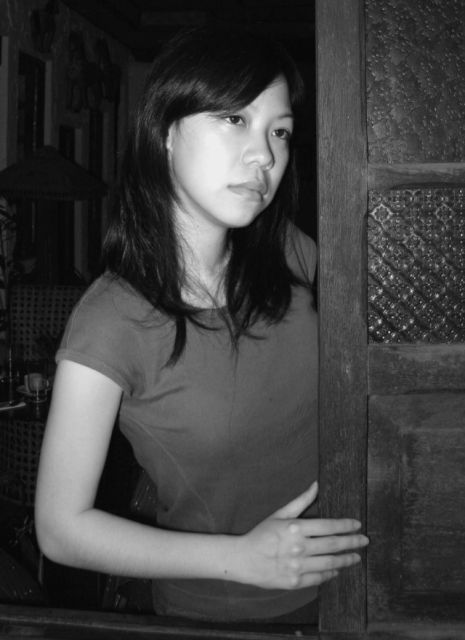
saying goodbye to our host Jay, one of us remarked the food was good. I remarked that the food ain't good, 'twas great!
(JB Nalang "stolen" portrait)

the best thing about the Kinabuhayan cafe experience wasn't exactly the food, place or the new things learned from photography-- it's the people I met have who share the same passion for travel and photography I now call friends!
Related Posts:
Banahaw Trek, Kinabuhayan Cafe Gateway to Mt Banahaw
Kinabuhayan Cafe is part of Viaje Del Sol
How to go to Kinabuhayan Cafe from the words of the co-owner himself (Winston Baltasar aka JB Nalang)
How to Commute/Commuting to Kinabuhayan Cafe:
Take any bus going south to Quezon or Bicol province like Jac or Jam liner. Make sure it stops in Tiaong, Quezon. Bus stations in Cubao or Buendia corner Taft.
Get off at the new Tiaong market. The jeepney to Dolores waits there. Last trip is at 6pm. Get off in Dolores at Dejarme St. which is 4 streets before the Dolores church (Our Lady of Sorrows). There is no Dejarme (pronounced "deHARme") sign but there is a
white grill sign saying "Paaralang Sentral ng Dolores". If you miss it, get off before the church and walk back.
Kinabuhayan Cafe is 50 feet away from the corner. Look for the tree house by the road, the bougainvilla in front, and the stained glass windows in the cafe.
IF YOU GET LOST IN DOLORES, DON'T ASK FOR 'KINABUHAYAN CAFE' OR YOU MIGHT BE DIRECTED TO 'KINABUHAYAN BARANGAY' ON THE MOUNTAIN SIDE. ASK FOR 'DEJARME ST' OR 'THE RESTAURANT OF JAY HERRERA'.
It's all good roads to Kinabuhayan Cafe. If you are on rough roads, you're probably past the cafe and heading towards the mountain side.
Labels: Calabarzon, Flora and Fauna, Flowers, Hotels and Resorts, Quezon, Resorts, Southern Tagalog, Viaje del Sol
posted by GingGoy @ 8:37 PM,
,
Quezon City: La Mesa Ecopark Entrance Fee/How to Get There
05 June 2006
I visited an oasis near the fringes of Quezon City where the megalopolis derives its water- La Mesa Ecopark where you can stroll, trek, bike, fish, swim (in a swimming pool, not the reservoir), frolic, picnic, rock climb, jog, run, boat, take pictures or simply lie down beneath a canopy of trees. I prefer places like this than those giant malls that basically offer the same old thing. We literally had a picnic!
The park is a project of the Quezon City government, MWSS, and ABS-CBN Bantay Kalikasan Foundation
pictures:
fishing place: eat what you catch here
 hope to see these in almost every place I go to someday including my hometown. Note they actually do segregation
 bulaklak na ewan:
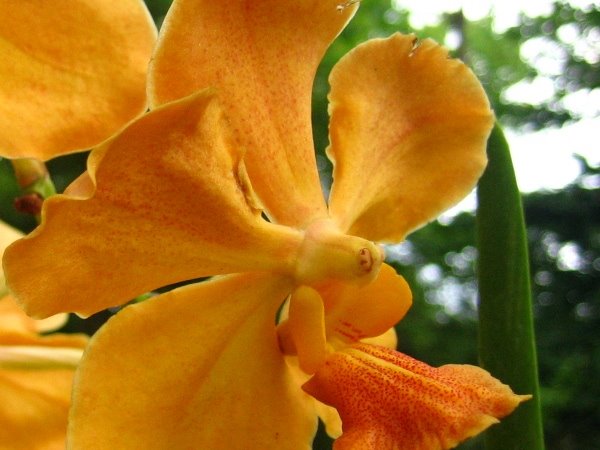
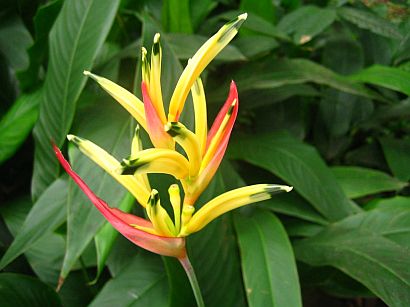 l'orchidee orange
 l'orchidee rose:
makahiya (Mimosa Pudica): the shy shrub (touch-me-not)

lotus pond
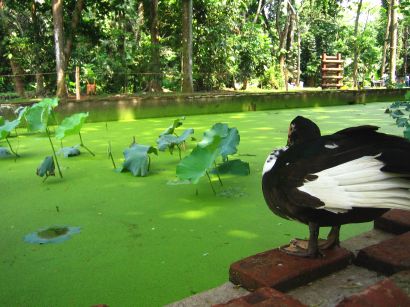
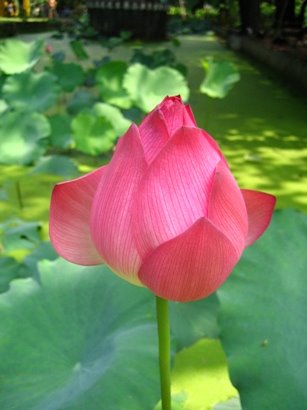
the lotus bud
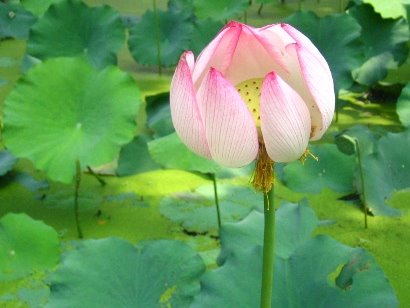
lotus flower in bloom
the busy bee (can't adjust camera shutter speed here but still ok for a P&S camera)

the kalabanga of my childhood. Laguna de Bay used to have this but I guess it's now extinct. Thanks to all for making the lake the way it is now--- moribund!

How to get to La Mesa Ecopark:
Commute to La Mesa Ecopark: Board Fairview bound bus or FX then drop off at the corner of Winston St and Commonwealth ave (the left side corner is Metrobank. There is a sign of La Mesa Ecopark hanging at the corner). Tricycles can be hired to take you to the park.
Driving directions to La Mesa Ecopark: from QC Circle take Commonwealth Avenue where you'll pass by Ever Commonwealth. Winston St is about 50 meters from Mercury Drug. From Winston turn right to Marlboro St (yes, this is "yosi" country) then left to Pall Mall St where signs will lead you to the park entrance.
Taxi from EDSA/Munoz, if you can get one, via Quezon Avenue and QC Circle is P180 only :)
La Mesa Ecopark Entrance fee/admission rates: PhP50 adults, PhP40 QC residents with ID, P20 Senior citizens. You should also try La Mesa Ecopark's zipline, wall climbing, boating and butterfly farm and other facilities.
All pictures taken with Canon Ixus 30, no post-processing except resizing and contrast adjustments. Why did I decide not to bring my Digital Rebel? Anyway, just to show a point-and-shoot camera can also do acceptable macro photography even without expensive lenses :)
La Mesa Ecopark is a nice garden wedding venue and pre-nuptial photoshoot location. you need not have a permit to do prenups here but probably for wedding and other events. you may call La Mesa Ecopark contact number for any inquiries, permits and rates
Labels: Flora and Fauna, Metro Manila, National Capital Region, Parks, Quezon City
posted by GingGoy @ 6:44 PM,
,