Jose Rizal in Singapore ( A Walking Tour)
30 December 2016
Only on the years after his first trip did he realize that he somehow retraced the path that Jose Rizal took on his first day in Singapore, his first foreign trip and stopover en route to Spain to continue his studies in medicine in May 1882. He was only 21 years then and visited Singapore 5 times.
These are the places Rizal saw on his first day in Singapore in May 1882 as described vividly in his diaries mostly in the Bras Basah district


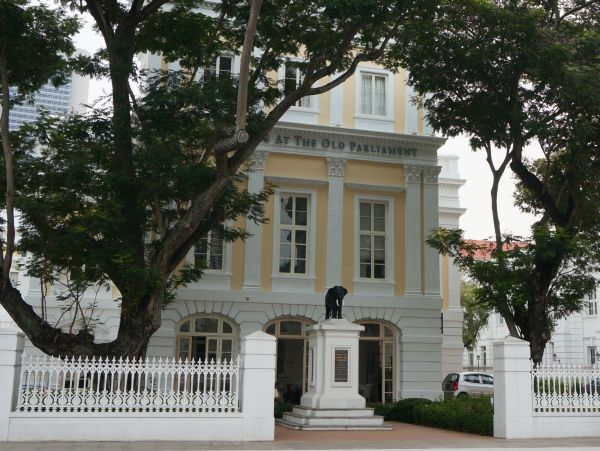
Sometime ago, in recognition of Singapore's role in Philippine history, the National Heritage Board of Singapore installed a historical marker near the Asian Civilizations Museum


Jose Rizal stayed at Hotel de la Paix on Coleman Street, demolished in the 1960s, now occupied by The Peninsula Hotel. On the second day of his stay, he visited theSongapore Botanical Garden, a future destination of Tutubi
In November 1896, Rizal passed by Singapore on the way home to the Philippines as a prisoner. His brothers petitioned Singapore authorities for a write of habeas corpus which was denied. He was executed by Spanish authorities on December 30, 1896 in Luneta, now part of Rizal Park in Manila.
Related Posts:
Jose Rizal's Favorite Food
Jose Rizal in Hong Kong
Labels: Jose Rizal, Singapore
posted by GingGoy @ 12:01 AM,
,


Jose Rizal's Favorite Food (153rd Birthday "Party")
19 June 2014
What were Jose Rizal's favorite food?
Answers: tinola (which was served at an event in the opening chapter of Noli Me Tangere), ginisang munggo, and tuyo (which was called sardinas secas). For dessert: toasted pastillas, yema, and empanada

What's his favorite fish?
Answer: ayungin (silver perch), endemic to Laguna de Bay, served in different ways, with hefty servings of rice. This was also narrated in his acerbic novel Noli Me Tangere where he wrote "the ayungin is good for sinigang; leave the biya for the escabeche, the dalag and the buan-buan for pesa." They are actually typical Filipino food.
What's his favorite breakfast?
Answer: no happy meals here but it's fried rice, tuyo and tsokolate eh (Spanish hot chocolate using tablea)
Now, Jose Rizal's secret to his genius is in his genes then later developed through hard work and study. It will not help you be a genius if you eat the same food he ate but at least you know geniuses eat like ordinary people.
Labels: Filipino Food, Jose Rizal
posted by GingGoy @ 9:16 PM,
,
The Largest Jose Rizal Monument in Calamba, Laguna
19 June 2012
Tutubi was able to visit the huge Rizal Monument at the 18 foot tall Jose Rizal Shrine in Nueva Vizcaya some time ago which held the record for largest Jose Rizal Monument only for a little time due to the building of this new monument, whose height was allegedly adjusted, to be a little taller, after Laguna officials knew of its presence.

 the 22 feet tall Jose Rizal Monument is the largest, tallest, biggest monument in the world honoring Jose Rizal
The giant Jose Rizal Monument, made of bronze and measuring 22 feet, can be found on Chipeco Avenue near Halang, Calamba City in front of the new Calamba City Hall and football field (pitch) and RSM Lutong Bahay Restaurant (the bypass road that avoids Calamba crossing traffic and SM City Calamba). It was unveiled last by Pres. Noynoy Aquino during the 150th birthday celebrations.
Related Post:
Jose Rizal Shrine in Nueva Vizcaya
Labels: Calabarzon, Jose Rizal, Laguna, Monuments, Southern Tagalog
posted by GingGoy @ 12:01 AM,
,
A Jordanian's Jose Rizal Shrine in Bayombong, Nueva Vizcaya
30 December 2011
The Jose rizal Shrine features a nice hillside park with a fountain, some retail space, winding road (that puts poorly-maintained national roads to shame), nicely manicured garden, an obelisk, helipad and some sort of clubhouse, still unfinished in front of the Jordanian's mansion. The centerpiece of the Rizal Shrine is the (now second) largest Jose Rizal monument built with fiber glass covered by a bronze-colored metal layer. The body weighs 1.2 tons while the base weighs 1.3 tons, according to Mahmoud Asfour, the naturalized Filipino developer of the park.
Jose Rizal Shrine in Bayombong, Nueva Vizcaya:
 a national heroes obelisk
 the now second largest jose rizal monument covered in bronze-colored metal. Note the presence of a NHCP (National Historical Commission of the Philippines, formerly NHI) marker
 the huge Rizal Monument with a person on the frame to add scale
 a nice view of the green fields of Bayombong from the hillside park
About Mahmoud Asfour:
Mahmoud Asfour was former vice president of Citibank International and a former official of the International Monetary Fund.
His "utang na loob" to a Filipino was rooted sometime when he was stranded for two days in middle of the desert in Saudi Arabia before the Gulf War without food and water, when he was found and rescued by a "good samaritan" Filipino truck driver.
He has since married a Filipina and settled in Nueva Vizcaya (Tutubi even met the good man and his son, a newly-minted computer engineering graduate) and helped put up business and charitable works in addition to the new Rizal Shrine. He was granted Filipino citizenship in July 2005.
---
The Jose Rizal Monument in Nueva Vizcaya held the title of "largest Rizal monument" for a short time only due to the construction of the giant Jose rizal monument in front of Calamba City Hall in Laguna, the birthplace of Jose Rizal, which was made taller by about 5 feet from this monument upon the orders of local politicians who've heard of the presence of this monument.
---
Tutubi, in one of his lucky days, chanced upon Mr Mahmoud Ashfour, sporting a Rizal t-shirt, personally supervising workers of his Rizal Shrine. He asked him his nationality, to which he promptly replied Filipino, and why was he building such a nice place. His reply turned a quizzical look on Tutubi and is not worth publishing here.
---
Jose Rizal Shrine and Monument
Barangay Casat, Bayombong, Nueva Vizcaya
Coordinates: N16 31 07.6 E121 08 30.2
road map here with the POI and road network personally added by Tutubi (mapping places is another one of his advocacy and worthwhile pastime)
Other Jose Rizal related posts (you may also click the Jose Rizal Category on the navigation pane):
How to Get to Fort Santiago
Jose Rizal Shrine Dapitan
Jose Rizal in Hong Kong,
Jose Rizal in Paco Cemetery
Labels: Cagayan Valley, Jose Rizal, Monuments, Nueva Vizcaya
posted by GingGoy @ 12:01 AM,
,
Jose Rizal@150 Heritage Trail Project (Lakbay Jose Rizal by DOT and NHCP)
19 June 2011
Herewith is the list of places Jose Rizal visited required you too visit to complete the Lakbay Rizal heritage trail. Note that Tutubi has been to all Rizal Shrines except 4 on the list. If only there's crediting of previous visits to the various Jose Rizal Shrines, Tutubi would have almost completed the list by now :(
Please read the individual blog posts provided to see information about the Rizal site's historical significance, how to get there, and other information e.g. entrance fees and museum hours. (Note all of these sites are present on OpenStreetMap, where you can browse the map to get an idea on how to get there (or download it to your PC then install to your Garmin GPS Navigators)
Destinations and Stamp Sites
National Capital Region
1. Prison Cell and Rizal Shrine, Fort Santiago, Manila
 on the floor of Rizal Shrine narrates the last day of the hero, Tutubi's freedom loving French friends "fell in love" with Rizal when he took them there after a brief tour of Luneta and the National Museum
GPS Coordinates: N14 35 40.3 E120 58 11.0
How to Get to Fort Santiago
2. Chapel Cell of Rizal, Fort Santiago, Manila
 just outside Rizal Shrine but without a roof
How to Get to Fort Santiago
3. Site of the Ateneo Municipal de Manila, Anda cor. Sta. Lucia St., Intramuros, Manila
Intramuros which included the previous location of Ateneo Municipal de Manila (now the Clamshell building) where Rizal started formal schooling
GPS Coordinates: N14 35 22.0 E120 58 23.7
WARNING: If you have an SLR/DSLR, be prepared to be harassed by the "Guardia Civil" of the Intramuros Administration (IA) who still have the medieval thinking that SLR cameras are for professional photographers only thus require you apply for a "permit to shoot" for a fee. A tourist spot promoted by the DOT and yet you can't take a souvenir picture with an SLR to share with friends for the world to "like." The rule is applied inconsitently where Tutubi was harrased by security guards for taking pictures of Manila Catheral and yet left a foreign tourist alone taking photos of the same Intramuros landmark. Such is the shame here, Jose Rizal would have cried out loud for such archaic and discriminatory practice against the indios of today.
The NHCP, however, through the forward mindset of Prof. Ambeth Ocampo, now allow photography at their shrines, thus the various pictures of Rizal Shrines on this post.
4. Site of the University of Santo Tomas, Banco Filipino Building., A. Soriano cor. Solana Sts., Intramuros, Manila
Everybody knows Rizal didn't get straight "sobresaliente" grades here in Medical school, one subject even had a passing grade
GPS Coordinates: N14 35 36.4 E120 58 27.1
5. Site of Trial of Rizal, Pamantasan ng Lungsod ng Maynila (PLM), Gen. Luna cor. Muralla St., Intramuros, Manila
The current site of Pamantasan ng Lungsod ng Maynila was where Jose Rizal was first tried in a court martial.
GPS Coordinates: N14 35 11.7 E120 58 39.1
6. Rizal Park, Roxas Blvd, Burgos, Kalaw and Taft Avenues, Manila
7. Rizal Monument, Roxas Blvd, Manila
Do you still need a picture of this one? :P
Coordinates: N14 34 54.6 E120 58 37.5
8. Rizal Execution Site (Light and Sound Museum), Roxas Blvd, Manila
 the actual site of Rizal's execution is inside the present Light and Sound Museum at the Luneta Park
GPS Coordinates: N14 34 58.2 E120 58 35.4
9. Rizal Fountain, Roxas Blvd, Manila
this is the Wilhemsfeld Fountain transferred from Germany to Luneta, where Rizal drank water while he stayed there
GPS Coordinates: N14 34 50.7 E120 58 39.5
10. Paco Park, San Marcelino and Gen. Luna Sts., Paco, Manila
the cemetery where Rizal was buried in an unmarked grave. click the link above to get directions on how to get there
Coordinates: N14 34 54.0 E120 59 19.5
Region III – Central Luzon
11. San Fernando Train Station, Brgy. Sto. Niño, San Fernando, Pampanga
In a few weeks, expect a picture of this historic train station that played a vital part during the Bataan Death March of WW II
Coordinates: N15 01 36.6 E120 41 12.4
12. Kamestisuhan District (Women of Malolos Marker/ Bautista House), Sto. Niño St., Malolos, Bulacan
Tutubi may have to re-visit a lot he acquired in Malolos (Woodlands of Grand Royale) and probably Barasoain Church to justify visiting this one. Read more about Kamestisuhan by Traveler on Foot
Region IV – Calabarzon
13. Rizal Shrine, J.P. Rizal St., Calamba City, Laguna
Tutubi's been here twice but he has no picture good enough for posting here. This How to Get to Rizal Shrine Calamba can be of help though.
Coordinates: N14 12 49.1 E121 09 59.9
14. Calamba Church (San Juan Bautista Church), J.P. Rizal St., Calamba City, Laguna
The church in Calamba (St. John the Baptist Parish) where the young Jose Rizal was baptized a Catholic
Coordinates: N14 12 49.7 E121 10 01.7
15. National Shrine of our Lady of Peace and Good Voyage (Antipolo Church), Oliveros St., Antipolo City
 Just in time, Tutubi is scheduled to buy a new car, and may have to have it blessed here like his dear Sakura :P
Waypoints/GPS Coordinates: N14 35 15.6 E121 10 35.2
Region V – Bicol Region
16. Rizal Monument, Magallanes and Justo Lukban Streets, Daet, Camarines Norte
 Visited twice already by Tutubi, this is the first Jose Rizal monument, erected in 1898. A third visit coming in a month or two
Region VI – Western Visayas
17. Molo Church (St. Anne’s Parish) and Escolta, Jocson and San Marcos Sts., Molo District, Iloilo City
Tutubi's been to Iloilo where he stayed at Sarabia Manor Hotel during the early fight of Pacquio at the Fort. Was only able to visit Jaro Cathedral, went to Roxas City (Capiz) then flew to Cebu the following day.
Coordinates: N10 41 51.0 E122 32 40.9
Region VII – Central Visayas
18. Dumaguete City
Been here in 2003 (or 2004) in very limited time but only explored nearby Siquijor Island. Wonder where to have the Rizal passport stamped in this city
19. Fort San Pedro, Pier Area, Cebu City
visited by Tutubi in 2003 but no "bloggable" pictures still even if he's been to Cebu countless times already.
Coordinates: N10 17 33.0 E123 54 20.2
Region IX – Zamboanga Peninsula
20. Rizal Shrine and Waterworks of Rizal, Barangay Talisay, Dapitan City
 photo of Rizal's house in Dapitan (yeah, NHI chairman Ambeth Ocampo should be informed that those NHI markers obstruct the view). The woman in white, not a nun but a member of a Rizalist sect worshiping Rizal as a God doing, does volunteer work in maintaining the shrine.
 A pool of water that comprise Jose Rizal's aqueduct that supplied potable water to Dapitan, a feat of water works engineering well ahead of his time according to modern day enngineers
21. Dapitan Plaza, Dapitan City, Zamboanga del Norte
 a drive-by picture of Dapitan Plaza, thus slightly blurred. note the Rizal Monument on the background
22. Site of the Casa Real, Barangay Talisay, Dapitan City, Zamboanga del Norte
 The historical marker reads: "This is the site of the Casa Real, official residence and administration building of the politico-military governor of the district. Here, Jose Rizal lived as an exile from July 17, 1892 to March 1893 when he was transferred to Talisay, now the Rizal Dapitan Shrine."
23. Dapitan Church, City Hall Drive, Barangay Sta. Cruz, Dapitan City, Zamboanga del Norte
 Dapitan Church with a partial view of Jose Rizal's map of Mindanao
Dapitan Church
24. Relief Map of Mindanao, Dapitan City, Zamboanga del Norte
Relief Map of Mindanao was built by Rizal just in front of Dapitan Church. (Tutubi tried to take an aerial picture of this map but the stairs to the Dapitan Church belfry were closed)
25. Santa Cruz Beach, Punto del Disembarko de Rizal en Dapitan, Sunset Boulevard, Dapitan City
 the fiery sunset on Sta. cruz Beach on Sunset Boulevard, Dapitan City. A dilapidated marker (at the time of Tutubi's visit) is just along the road
26. Dipolog Cathedral, Dipolog, Zamboanga del Norte
 Dipolog Cathedral visited by Rizal during his exile in Dapitan. Church altar said to be designed by Jose Rizal. The building facade recently had a facelift that Jose Rizal himself would not recognize as it's very much different from the original
Coordinates: N8 35 9 E123 20 44
27. Rizal Farm, Katipunan, Zamboanga del Norte
Of all the 27 sites, this may be the hardest one to reach. Katipunan town is south of Dapitan and Dipolog, the twin cities of Zamboanga del Norte. No information yet on the interwebs on how to get there or how it actually looks like
Lastly, did you know that Tutubi was able to visit two sites related to Jose Rizal in Hong Kong, the first one's the site of clinic (on D'Aguilar Street) and the second one's his home where he stayed on Rednaxela Terrace (the long escalator).
Probably next year, he'll also explore the places Jose Rizal visited in Singapore.
Labels: Bulacan, Camarines Norte, Cebu, Cebu City, Dumaguete, Iloilo, Iloilo City, Jose Rizal, Laguna, Manila, Negros Oriental, Pampanga, Zamboanga del Norte
posted by GingGoy @ 11:30 PM,
,
How to Get to Fort Santiago: Entrance Fee, Commute, and Directions
11 June 2011
Note: There will be a Rizaliana party at Fort Santiago on June 19 at 6pm with food courtesy of Illustrado and Adarna Restaurant. Free entrance if you can come in 19th century period Filipiniana costume, otherwise it's only P100 to join the party and evening of art, music, poetry and fireworks.
UPDATED: February 2014
Fort Santiago Attractions and Amenities:
Rizal Shrine, Jose Rizal's Prison Cell, last steps of Jose Rizal cast in brass going to Luneta, Plaza Armas, old World War II era Japanese M4 Sherman tank, cafe and souvenir shop.
 the gate of Fort Santiago, with moat in view, where you can see Santiago Matamoro, from whom the Spanish fort was named after. Picture taken with an iPhone 4 (darn, that if you have an SLR, you need to get a permit to shoot lest you get apprehended by the "guardia civil")
How to get to Fort Santiago, Intramuros, Manila:
For a reliable and updated map of Intramuros, you can visit OpenStreetMap for reference.
How to commute to Fort Santiago, Intramuros, Manila:
From Quezon City, the easiest way is to board jeepneys with signboard Quiapo/Pier (either from Project 2/3, Cubao, Fairview, Proj 8, Project 6) that pass by inside Intramuros (just request the driver to drop you off within walking distance of Fort Santiago)
From LRT, the nearest station is Central Station where you can walk to the foot of Quezon Bridge to ride the Pier jeepneys from Quiapo (or also from Carriedo Station where Pier jeepneys pass by Quiapo Church) Only minimum fare required.
Driving Directions to Fort Santiago, Intramuros, Manila:
From Makati, the easiest way is from Sen. Gil Puyat Avenue (Buendia) or Ayala Avenue is just drive towards Roxas Boulevard all the way to Anda Circle (roundabout) where you turn right to Soriano then left turn to Gen. Luna (Landmark: Palacio del Governador) just before reaching Manila Cathedral.
From Quezon City, you can get there easiest (but not fastest) via Quezon Avenue then Espana, Lerma and Quiapo, cross Quezon Bridge then turn right immediately after Quezon Bridge to Riverside Drive (that pass under MacArthur and Jones Bridge). When you see Manila Cathedral, Plaza Roma and Palacio del Governador, you can get off then walk to your right going to Fort Santiago.
Parking: an open car park is just beside the entrance gate of Fort Santiago with parking fee of PhP40 for cars. Intramuros, ins spite of it's tourist attraction tag, has very limited parking spaces though if you can't park there. There are parking lots at the old clam shell and also at the site of the old Ayuntamiento near Plaza Roma or street parking on General Luna and the area around Plaza Roma in front of Manila Cathedral.
Fort Santiago
Entrance Fee/Admission price: PhP75.00 adults; PhP50 children/students/teachers (valid IDs required); free entrance for disabled and senior citizens
Open Hours/Schedule: daily from 8am to 6pm including holidays
Coordinates: N14 35 39.1 E120 58 13.1 (handy for GPS device users)
For guided tours of Fort Santiago, educational tours and field trips, you can request from Intramuros Administration (where you also request a "permit to shoot" for professional photographers)
Warning: there still exists the stupid rule of security not allowing "big cameras" i.e. SLR/DSLR for taking pictures/photography inside Fort Santiago and Intramuros in general (unless you're a foreigner). Such medieval mind of security guards and of the Intramuros Administration tag SLRs are for professional photographers only.
Labels: Intramuros, Jose Rizal, Manila, Metro Manila, National Capital Region, Spanish Forts
posted by GingGoy @ 8:25 PM,
,
Jose Rizal Street in Sampaloc, Manila
02 June 2011
Near his first "home" in Sampaloc, Manila are the Rizaliana streets of Sampaloc Manila: P. Florentino, Pi y Margal, Dapitan, Laong Laan, Maria Clara, Simoun, Calamba, Makiling, Retiro, and Dimasalang.
From Sampaloc, Tutubi transferred to Reten near P. Noval, Miguelin, Sulucan (near the twin churches of Bustillos), Lardizabal (near Legarda) then "leveled up" to several "apartments for rent." On Prudencio St. From Sampaloc near Balic-balic, he transferred to Makati near Rizal Village, lived for a short time in Pasig City near Kapitolyo then finally to his present home in Quezon City.
 The Mabuhay Rotonda marks the boundary of Manila and Quezon City. At the back is España, Sampaloc, Manila going to Quiapo
This is just one of a series of posts on Jose Rizal in time for the celebration of his 150th birthday on June 19.
History Behind The Rizaliana Streets of Sampaloc, Manila
You may view a Map of Sampaloc Manila here for your reference.
P. Florentino St.
Named after Padre Florentino in Rizal’s second novel El Filibusterismo. Padre Florentino was priest and a friend to some of the novel’s characters. On P. Florentino street stands the transmission tower of Philippine Long Distance Telephone (PLDT) near Welcome Rotonda (now Mabuhay Rotonda).
Piy Margal Street
An erroneously spelled street named after Francisco Pi y Margall, a "friend" of Rizal, and president (for only more than a month) of the short-lived Spanish Republic of 1873. Pi y Margall advocated autonomy for Spain's colonies including the Philippines as well as other "radical" ideas at the time.
Dapitan Street
The rural town of Mindanao where Jose Rizal was exiled, built a home, school from his lottery prize, and "married" Josephine Bracken, now called the Shrine City of Dapitan, part of Zamboanga del Norte. Dapitan hosts several of the 27 places with historical ties to Jose Rizal listed in the Lakbay Rizal (Rizal@150 Heritage)
Laong Laan
One of the pseudonyms of Jose Rizal (Laong Laan meaning in English: Ever Prepared). In a letter to Marcelo H. Del Pilar in 1890, Jose Rizal wrote:
“In my boyhood it was my strong belief that I would not reach the age of thirty, and I do not know why I used to think in that way. For two months now almost every night I dream of nothing but of friends and relatives who are dead. I even dreamed once that I was descending a path leading into the depths of persons seated and dressed in white, with white faces, quiet, and encircled in white light. There I saw two members of my family, one now already dead and the other still living. Even though I do not believe in such things and though my body is very strong and I have not sickness of any kind, nonetheless I prepare myself for death, arranging what I have to leave and disposing myself for any eventuality. Laong Laan (Ever Prepared) is my real name.”
Laon Laan is a one-way street going north while Dapitan allows the opposite south-bound direction going to Quiapo. These two streets are where the Quiapo - Dapitan jeepneys ply their route. Near the ends of these two roads, you can find Dapitan Arcade, where you can buy housewares and native products at bargain prices.
Maria Clara St.
From high school days with the studies of Noli Me Tangere and El Filibusterismo mandated by the Rizal law (principally authored by Sen. Claro M. Recto and fought by the bishops and priests of the Catholic Church like the now raging RH Bill), Maria Clara was the love of the character Crisostomo Ibarra of Noli Me Tangere.
Other minor streets of Sampaloc with Rizaliana links are Basilio, Sisa, Ibarra and Crisostomo all from the national hero's first novel while Simoun, from the vengeful Don Simoun of Rizal's second novel who's actually Ibarra disguised as a jeweler from Cuba.
Calamba and Makiling Streets
The next streets parallel to Maria Clara are Calamba, after Jose Rizal's hometown and birthplace. On Calamba, sandwiched by Sisa and Instruccion Streets is the Nuestra Señora del Perpetuo Socorro Parish (Our Lady of Perpertual Help Parish). Makiling is named after the mystical mountain near Calamba and cited in some of Rizal's works.
Retiro
Now "stupidly" renamed by Manila politicians after Norbeto Amoranto Sr., was inspired by Jose Rizal's poem "Mi Retiro" written in Dapitan.
 picture of Mi Retiro Rock in Dapitan where the eponimously titled poem was written. The rock provides a good view of dapitan harbor from Jose Rizal's estate in Talisay, Dapitan.
Blumentritt
After Rizal's best friend Prof. Ferdinand Blumentritt to whom Rizal exchanged many letters. His mastery of the Tagalog language made Rizal write him, along with a Tagalog book on arithmetic, that marked the beginning of their beautiful friendship.
Dimasalang
Another one of Jose Rizal's pen names, it means "untouchable" from the Tagalog "di masalang" now used as one word. At the intersection of this street with Maria Clara and along Dos Castillas Street stands Dangwa (Manila Flower Market) where fresh flowers from Baguio City are unloaded weekly by Dangwa Bus Company (thus the name Dangwa Flower Market). The other segment hosts several shops selling "chop-chop" parts of antique, or rather, heritage houses.
Morayta
Morayta Street, now called Nicanor Reyes where Far Eastern University (FEU) is located, was named after University of Madrid (Universidad de Madrid) professor of history Miguel Morayta. It was through Prof. Morayta that Rizal became a freemason under the Gran Oriente de Español, where he adopted Dimasalang as his Masonic name.
Near Morayta and University of Sto. Tomas (UST) are the streets of P. Noval (Padre Noval, where you can ride the PVP Liner bus to Ayala Avenue in Makati), P. Campa (Padre Campa), and P. Paredes.
Other prominent streets of Sampaloc, Manila are the twin one-way streets of V.G. Cruz (formerly Economia), M. Dela Fuente (formerly Trabajo, where the old Baron Theater used to stand), A.H. Lacson (formerly Gov. Forbes, named after former Manila mayor Arsenio Lacson, and where the west-bound jeepneys plying the Tayuman - Lardizabal route pass), Maceda, S.H Loyola (Sergio H. Loyola, formerly Lepanto), Fajardo (formerly Lealtad), G. Tuazon (where the Balic-balic jeepneys pass) Earnshaw, Bayani, and Santol
Lastly, España Boulevard, Sampaloc, Manila's main street is not named with Jose Rizal in mind but it's a condition stipulated on the deed of donation of a portion of Dominican land of UST that the street fronting the oldest university in Asia be named Espana.
España therefore is one of the those streets of Manila that stupid, historically-challenged, heritage-agnostic politicians of Manila cannot change lest the street reverts to Dominican hands.
Labels: Jose Rizal, Manila, Metro Manila, Philippine History
posted by GingGoy @ 9:57 PM,
,
How to Get to Rizal Shrine, Calamba Laguna: Map, Commute Directions
03 May 2011
For the meantime, here's a post to answer numerous queries on How to get to Rizal Shrine, Calamba Laguna for your reference:
How to Commute to Rizal Shrine, Calamba:
From EDSA, Cubao, Quezon City, you can ride an HM Transport bus or a Green Star Express bus on Taft Avenue, Pasay (near Buendia LRT station) with signboard Sta. Cruz/Calamba. Alight at Crossing Calamba just past SM Calamba then ride a jeepney with signboard Calamba poblacion or a tricycle to take you to the Bahay ni Rizal.
From Batangas, you can ride the jeepney that ply the Lipa - Calamba route via Tanauan then ride a tricycle at the Calamba Central Transport Terminal near Calamba Crossing.
From Quezon Province, the easiest way is from Lucena Transport terminal with buses and jeepneys to Sta. Cruz, transfer to a Calamba Bound jeepney (or an HM Transport or Green Star Express aircon bus) and alight in Calamba followed by a tricycle ride.
From Cavite, best way is to go to Tagaytay Rotonda from Aguinaldo highway, transfer to a jeepney going to Balibago, Sta. Rosa, take another jeepney to Calamba then finally a tricycle to Rizal Shrine.
An interactive street map of Rizal Shrine can be found on OpenStreetMap
Driving directions to Jose Rizal Shrine in Calamba Laguna:
From Makati, just take SLEx then exit at Calamba toll gate, head towards Calamba Crossing then straight ahead is the Rizal shrine to your right.
Car parking available near the shrine, at the (Parish of St. John the Baptist) Calamba Church and street parking.
Please call the National Historical Commission of the Philippines (NHCP, formerly National Historical Institute (NHI)) as they're the one maintaining the home of Jose Rizal, for educational field trips and bookings, entrance fee (as if there's one), shrine open hours, photography/picture taking permits or other events. Contact Telephone numbers on NHI official website or get in touch with the caretaker/curator in Calamba City.
you may be looking for:
House of Jose Rizal in Calamba
"Bahay ni Rizal" Jose Rizal home in Calamba, Laguna
Bahay na Bato of Jose Rizal Shrine Calamba, Laguna
Labels: Jose Rizal
posted by GingGoy @ 10:28 PM,
,
The Art of Eating Ayungin: Jose Rizal's Favorite Fish
07 October 2010

Ayungin (Scientific name: Leiopotherapon plumbeus), a freshwater fish species endemic in the Philippines, is omnivorous and has a silver color and small scales. It used to be plentiful in Laguna Lake and other freshwater bodies but overfishing by local fishermen coupled with the slow demise of the once pristine lake have now made it scarce. It is said to be the tastiest freshwater fish in the Philippines (the most expensive fish is the ludong, caught in the shores off Cagayan) is endemic to Laguna de Bay and was introduced to San Pablo City's Sampaloc Lake in the 1950s, then later to Taal Lake in the 70s.
Today, seeing ayungin in the public market of Paete is a rare sight, Tutubi buys them as they're unloaded fresh by fishermen on the shores of Laguna de Bay, a place locals call Wawa, at the point where Paete River (creek) meets Laguna Lake.
In Rizal province, particularly in the town of Binangonan, silver perch is caught commercially then made into dried fish (daing na ayungin) whose taste can rival the famous danggit of Cebu. It costs about P200/kilo in Rizal and Laguna and can go as high as P500 per kilo in Manila.
How to eat Ayungin, kamayan style:
Hold the fish with one hand then remove the upper and lower fins. Using your fingers, rub both sides as if you're pinching the fish from tail to head to remove the scales and expose the meat. Partake of the meat and roe, if present. Be careful of small fish bones (para di ma-tinik)
Jose Rizal Trivia:
The ayungin is the Philippine national hero's favorite fish where Jose Rizal reportedly partook the fish, served in different ways, with hefty servings of rice. This was also narrated in his acerbic novel Noli Me Tangere where he wrote "the ayungin is good for sinigang; leave the biya for the escabeche, the dalag and the buan-buan for pesa."
Rizal has a very good reason why the ayungin is his favorite fish!
Related Posts:
Utak Biya
Big Head Carp
Labels: Cuisine, Flora and Fauna, Jose Rizal, Laguna
posted by GingGoy @ 10:32 PM,
,
Dapitan Church and Jose Rizal's Map of Mindanao
28 August 2009
St. James Church in D apitan is not old, unlike the beautiful baroque churches made of adobe or coral stones scattered all over the Philippines, but its claim to fame, despite losing it's original design by people agnostic of architectural preservation, is that Jose Rizal used to hear mass regularly on Sunday mornings. A marker is even present near the end pews to highlight the fact.
Dapitan Church with a partial view of Jose Rizal's map of MindanaoIn front of church, is a small enclosed area that most visitors don't recognize as a map of Mindanao island that was built by Jose Rizal himself.
 Sign reads "Mapa ng Mindanao Hinimo ni Jose Rizal"
Tutubi wanted to take picture of Mindanao map from the belfry for the whole image to be recognizable but it was undergoing renovation and off-limits to visitors.
a few meters from the church across the street is Casa Real where an NHI marker stands to remind people of its historical significance.

The historical marker reads: "This is the site of the Casa Real, official residence and administration building of the politico-military governor of the district. Here, Jose Rizal lived as an exile from July 17, 1892 to March 1893 when he was transferred to Talisay, now the Rizal Dapitan Shrine."
Further away from Casa Real is an old bahay na bato of Corazon de Dapitan Restaurant and Delicacies (Corazon de Dapitan literally means "Heart of Dapitan") that provokes a feeling of nostalgia of the Dapitan during Rizal's time.
 Old "bahay na bato" turned into a restaurant named Corazon de Dapitan
Dapitan is a destination for lovers of history particularly those studying the Life and Works of Jose Rizal.
Tutubi recommends visiting Dapitan in Zamboanga del Norte for the history fix should you find yourself on the beach of Dakak Beach Resort.
Related Posts:
Ilihan Hill
Rizal Dapitan Shrine
Dakak Park and Beach Resort
Labels: Churches, Dapitan, Jose Rizal, Zamboanga del Norte, Zamboanga Peninsula
posted by GingGoy @ 8:16 PM,
,
A Visit to Jose Rizal Shrine in Dapitan, Zamboanga Del Norte
07 August 2009
It was during the period from June 1892 to July 31, 1896 that Jose Rizal spent years of his life as a physician where he treated many eye patients including that of his mother; an engineer, even without formal training, managed to design and build a water system that provided water to Dapitan (that awed modern day engineers due to lack of tools during his time); an educator where he founded a school for boys (one of his students was Jose Caancan who came all the way from Paete, Laguna); a businessman engaged in hemp, copra and log trading; agriculturist by planting various trees in his Talisay estate. All these in addition to being a linguist (fluent in 22 languages), inventor, scientist and artist.
photo of Rizal's house in Dapitan (yeah, NHI chairman Ambeth Ocampo should be informed that those NHI markers obstruct the view). The woman in white, not a nun but a member of a Rizalist sect worshiping Rizal as a God doing, does volunteer work in maintaining the shrine.Rizal described his life in Dapitan in a letter to his Austrian friend Ferdinand Blumentritt dated Dec. 19, 1893:
"I shall tell you how we live here. I have three houses; one square, another hexagonal, and a third octagonal, all of bamboo, wood and nipa. In the square house we live, my mother, sister Trinidad, a nephew and I; in the octagonal live my boys or some good youngsters whom I teach arithmetic, Spanish and English; and in the hexagonal live my chickens. From my house I hear the murmur of a crystal clear brook which comes from the high rocks ; I see the seashore , the sea where I have small boats, two canoes or barotos, as they say here. I have many fruit trees, mangoes, lanzones, guayabanos, baluno, nangka, etc. I have rabbits, dogs, cats,etc. I rise early - at five - visit my plants, feed the chickens, awaken my people and put them in movement. At half-past seven we breakfast with tea, pastries, cheese, sweetmeats, etc. Later I treat my poor patients who come to my land; I dress, I go to the town in my baroto, treat the people there, and return at 12 when my luncheon awaits me. Then I teach the boys until 4 P.M. and devote the after- noon to agriculture. I spend the night reading and studying."
 Casa Redonda, the hexagonal house of Rizal where his chickens lived (lucky chickens)
 Casa Cuadrada, the square house of Rizal Shrine, Dapitan City
Significant events of Jose Rizal's Exile in Dapitan:
Sept. 21, 1892 Rizal received his lottery winnings, via the mail boat Butuan, for second prize of P20,000.00. His share of the "lotto" winnings was P6,200.00, P2000 of which he gave to his father, P200 to his friend Jose Maria Basa in Hong Kong and the rest he used to buy the land in Talisay that he developed. It should be noted that Jose Rizal had no vices, except playing the lottery.
The aborted duel with a Frenchman named Juan Lardet due to a business deal. Mr. Lardet wrote a Dapitan merchant about the deal that was forwarded to Rizal who was instantly angered as it's an affront to his integrity. The duel didn't materialize due to the intercession of Spanish Captain Carnicero on Mr. Lardet due to his knowledge of Rizal's expertise on martial arts especially fencing and pistol shooting, making the Frenchman the underdog in the field of honor.
Fr. Sanchez, Rizal's favorite teacher at the Ateneo, visited him in another effort to bring him back to the Catholic fold; it again ended in failure. Fr. Sanchez was the only priest to publicly defend the Noli Me Tangere in public.
The Jose Rizal Pastells debate on religion occurred during this time where the Jesuit priest Fr. Pastells tried to win back Rizal to the Catholic faith. In spite of this, Rizal still heard mass at Dapitan Church but with his own variant of enlightened Catholicism.
Pablo Mercado, whose real name was Florencio Namanan, was sent by Recollect Friars in a secret mission to spy on Rizal in order to incriminate him for revolutionary activities. He never succeeded in his mission as Rizal figured him out early on (it's not an assasination attempt on Rizal, but merely an espionage mission)
Due to his earlier successful stint as an eye doctor in Hong Kong, Mr. Taufer accompanied by his stepdaughter Josephine Bracken visited him for an eye operation. Josephine Bracken later became his wife (though they never really had a church wedding nor a civil wedding due to refusal by the friars and civil authorities, Rizal and Josephine had a son who died shortly after birth due to miscarriage).
Perhaps the most significant event that occurred in Dapitan was the visit by Pio Valenzuela (from whom Valenzuela City of Metro Manila was named after), a member of the secret society of the Katipunan founded by Andres Bonifacio, where Rizal was presented the plan of the Katipunan to which he decided not to support arguing that the people should wait for the right time to launch a revolution and avert shedding of blood. He also didn't approve of the Katipunan's plan to rescue him as it would reflect negatively on his word of honor.
A pool of water that comprise Jose Rizal's aqueduct that supplied potable water to Dapitan, a feat of water works engineering well ahead of his time according to modern day enngineers The Mi Retiro Rock, a large rock in Talisay where Rizal enjoyed watching sunsets. He also wrote a poem titled "Mi Retiro" on this rock.
Notes:
Rizal Shrine is maintained by the National Historical Institute. The Shrine coumpound is always open and provided with a security guard. A museum is also inside the shrine that's closed on Mondays. Volunteer shrine tour guides and photographers are present at the gate. A tour of this shrine is included at Dapitan tour packages and field trips by Buklod and Dakak Park and Beach Resort. Contact number of the shrine to be posted once available. Rizal Shrine entrance fee: None (it's free)
How to get there:
Rizal Shrine is just a short tricycle ride away from "The Shrine City of Dapitan" proper. The closest airport is Dipolog Airport where you ride a tricycle to Dipolog Transport Terminal then a bus to Dapitan City. Travel time is just less than an hour.
Please don't request Tutubi for some sort of analysis and reaction paper to Jose Rizal's life in Dapitan. He doesn't tolerate laziness of some students looking for shortcuts. Jose Rizal won't be proud of you for sure.
Related Posts:
Jose Rizal in Hong Kong
Jose Rizal's Grave in Paco Cemetery
Jose Rizal in UST
Labels: Dapitan, Historical Shrines, History, Jose Rizal, Zamboanga del Norte, Zamboanga Peninsula
posted by GingGoy @ 8:30 PM,
,
Jose Rizal: "Why independence, if the slaves of today will be the tyrants of tomorrow?"
12 June 2009
It's a national holiday in the country and all sorts of celebration particularly at the Rizal Park (formerly Luneta) in Manila.
Even Google congratulates the Philippines this day for becoming Asia's first republic.

But why the title of this post?
(this is a rant post, continue reading if you so desire)
The subject is a quote from Jose Rizal's second novel El Filibusterismo, from the words of Padre Florentino, talking to the dying Simoun, "Why independence, if the slaves of today will be the tyrants of tomorrow?" at the end of the classic novel that inspired Andres Bonifacio to form the Katipunan and take up arms against the tyranny of Spain.
History tells that it was Gen. Emilio Aguinaldo came to declare the short-lived independence from Spain which was stolen later by the Americans.
Tutubi feels the country is not really free. He laments the Philippine government's subservience to foreign powers highly evident in it's words and actions (need he cite cases?) as well as the Filipino people's bondage to the yoke of poverty.
Just sometime ago, the House of Representatives passed House Resolution 1109 (HR1109) that seeks to turn Congress into a Constitutional Assembly, paving the way for changes to the Philippine Constitution, even without the Philippine Senate, counting on a "loophole" in the Philippine Constitution that they think they can do it alone sans the oppositionist Senate.
Those who voted for the resolution argued the country really needs to amend the charter to add provisions like allowing foreigners to own lands. They were able to approve the controversial measure in a marathon session and yet the pending Land Reform Law still can't see the light of day.
Congressmen really don't know much about history when history tells us too many revolts in the past were fueled by Filipino's desire to own the land they till. Allowing land ownership by foreigners, in the guise of economic development, will further drive up the price of land, already out of reach by most Filipinos.
This ignominious resolution will also pave the way for various insertions such as term extensions, shift to parliamentary and/or federal form of government et al
Tutubi is not against charter change but it's not the end all and be all of improving the lives of millions of Filipinos. It's the change of government that's the key, a government devoid of self-serving politicians-- the trapos; decentralization and recognition of the right to self-determination. The timing itself of the resolution is really distrustful (less than a year away from national elections) fueled by speculations that the numerous trips of PGMA to her home province will pave the way for her election as the representative and later as prime minister in a parliamentary Philippines, thus perpetuating the much-hated regime next to President Marcos.
Jose Rizal's words were relevant then as they are now.
But even in these times of hardships, in spite of various opportunities to leave the country, an opportunity not available to everyone, Tutubi still prefers to stay behind.
Long live the Philippines! May you someday attain true independence!
Labels: Jose Rizal, Philippine History
posted by GingGoy @ 6:07 PM,
,
UST: The Great Raid, Jose Rizal and The Arch of the Centuries
03 February 2008
Seemingly lost to history, the "Great Raid" in Cabanatuan is not the only one in the annals of history. It was followed by daring dawn raids in Old Bilibid Prison in Manila (now Manila City Jail), University of the Philippines Los Banos (UPLB) in Laguna and lastly in UST Compound in Sampaloc, Manila. All four were Japanese concentration camps where American prisoners-of-war (POW) were incarcerated.
This post serves to commemorate a forgotten event in the historic Battle of Manila in 1945 where POWs were successfully rescued from the UST campus.
On February 3, 1945, right after "Ghost Soldiers" successfully rescued prisoners in Cabanatuan, the gates of UST campus were smashed by commando forces led by a Filipino soldier Capt. Manuel Colayco (the lone casualty of the attack) that began the month long, destructive and bloody Liberation of Manila that resulted in the death of an estimated one hundred thousand innocent civilians including women and children due to reckless American bombings and Japanese inhuman acts.
University of Santo Tomas
The University of Sto. Tomas, whose complete name is Pontifical and Royal University of Santo Tomas, The Catholic University of the Philippines, occupies an entire city block carved out of the huge Sulucan estate in Sampaloc district of Manila bounded by Espana Boulevard, P. Noval, Lacson (Gov. Forbes) and Dapitan streets. It was founded in 1611 as Colegio de Nuestra Señora del Santísimo Rosario, later renamed Colegio de Santo Tomas, and elevated to university status in 1645.
UST Main Building
 UST Main Building picture with Benavides Monument on the foreground
The University of Santo Tomas’ main building in Sampaloc, Manila, completed in 1927 is earthquake-resistant. Its design enables the building to sway without getting cracked in case of an earthquake. (Pusang Maganda has a nice picture of the magnificent facade of UST Main Building here.)
The three statues symbolizing Faith, Hope and Charity, also known as Tria Haec, (depicted above) on top of the main building were made by Italian Sculptor Francesco Monti, the same man who sculpted the three angels holding sampaguita garlands of Quezon Memorial Shrine in Quezon City.
Arch of the Centuries
Though not as grand as Paris' Arc de Triomphe, the Arch of the Centuries is the only survivor of the original UST campus in Intramuros during WW2, relocated piece by piece to its present location. It sports doric columns and baroque features. The life of Saint Thomas Aquinas is depicted on the sides of the arch while markers of Jose Rizal, Philippine national hero, and Manuel Quezon, former Philippine president, are also present. Both Rizal and Quezon are graduates of UST.
 Arch-door of the old university building in Intramuros erected in the 17th century as it survived the war of 1941-1945
 Replica of the Arch-door of the old university building in Intramuros as it appeared in the 17th century (This is the one facing Espana Blvd. picture edited using Photoshop's Shadow/Highlight adjustment to eliminate harsh shadows)
 Arch of Centuries Gateway to history of finest breed of Filipinos 1954 AD
 "Jose Rizal 1861-1896 Jose Rizal Alumno de la Real y Pontificia de Universidad de Santo Tomas de Manila, Filipinas, 1877-1882"
 The marker on the Arch of Centuries pertaining to Jose Rizal who enrolled in Medicine in the university from 1877 to 1882. Rizal, however, found the Dominicans (as the Order of Preachers were called) discriminating against Indios (referring to natives by Spanish during that time, Filipinos refer to Spaniards born in the Philippines) and got grades ranging from a mere aprobado (passing), bueno (good), to sobresaliente which were very different from numerous sobresaliente grades at the Ateneo. He did not, however, graduate on top of his class like most people think. (Source: Ambeth Ocampo)
Tutubi was happily taking pictures of the serene and relaxing UST campus when he "flew" too near the security guard at the gate and was asked if he's an alumnus of UST, if not, he needed to secure a permit to take pictures. Tutubi, a graduate of a different university, just stopped taking photos just to avoid an argument yet saved these photos already taken for this post.
Did you know that UST is not the first university in the Philippines and Asia as most people know? It's only the second yet the oldest university in these islands, extant that is. More of this next time :P
---
Other places of interest in UST:
UST Museum of Arts and Sciences:
Museum entrance Fee: Free for UST students and Alumni, P20 for students, P30 for non-students. Museum open from Tuesday to Friday from http://www.ustmuseum.com/
Santissimo Rosario (UST Church actually UST Chapel) was the temporary home of the Our Lady of La Naval during World War 2, when the old Santo Domingo Church was bombed. The La Naval Image was transferred later to the new Santo Domingo Church in Quezon City after the war.
Near UST, at the end of Espana Blvd is Mabuhay Rotonda (formerly Welcome Rotonda) that marks the boundary between city of Manila and Quezon City. At the opposite end of Espana is the UNESCO-cited art-deco Far Eastern University (FEU) architectural gem of a campus.
Note: España Boulevard was donated to the Philippine government where the deed of donation stipulates that the land cut by this famous avenue will be and remain public provided it is called España, thereby making it immune from stupid politicians of Manila whose accomplishments only range from changing historic street names in "honor" of unknown politicians)
How to get to UST, Manila:
Commute to UST: from Taft Avenue, board a jeep bound for Quezon city with these signboards: Cubao, Project 2&3, Project 4, Project 6, Fairview, Project 8 and you'll pass by Espana Boulevard in front of the school. From MRT Cubao, Quezon Avenue or North Avenue stations, you may board jeeps bound for Quiapo.
Commuting from Marikina, you may take LRT 2 Pureza station then walk towards Lardizabal street where the Tayuman-bound jeeps hold terminal and pass by Gov. Forbes, now Lacson St. Alternately, the Lardizabal-bound jeeps are available at LRT Tayuman station though they will pass M. de la Fuente St. (Trabajo) on their return trip.
Driving Directions to UST by car: gates are on Espana Blvd and Dapitan St. (near UST Hospital) though Dapitan is a one way street, you may take Lacson St then left turn to Dapitan to go there.
Labels: Jose Rizal, Manila, Metro Manila, Universities, World War II
posted by GingGoy @ 3:09 AM,
,
On Jose Rizal's Retraction: The Great Debate
29 December 2007
At the end of the history lesson on Rizal, professors will always emphasize that after writing his two novels which are obviously attacks against "men in robes," Jose Rizal returned to the fold of the Catholic Church by signing a retraction on the eve of his execution on December 29, 1896 (similar to Voltaire again by the Jesuits).
The retraction text was published on the friar-controlled newspapers La Voz Española and Diaro de Manila on the day of execution, and on El Imparcial, the morrow.
The retraction document was never shown to curious people not even family of Rizal and was supposedly lost.
Almost forty years later, the supposed "original" retraction document was discovered by Fr. Manuel Garcia, C.M. in 1935, that states (in full text):
"Me declaro catolica y en esta Religion en que naci y me eduque quiero vivir y morir.
Me retracto de todo corazon de cuanto en mis palabras, escritos, inpresos y conducta ha habido contrario a mi cualidad de hijo de la Iglesia Catolica. Creo y profeso cuanto ella enseña y me somento a cuanto ella manda. Abomino de la Masonaria, como enigma que es de la Iglesia, y como Sociedad prohibida por la Iglesia. Puede el Prelado Diocesano, como Autoridad Superior Eclesiastica hacer publica esta manifastacion espontanea mia para reparar el escandalo que mis actos hayan podido causar y para que Dios y los hombers me perdonen.
Manila 29 de Deciembre de 1896
Jose Rizal
Jefe del Piquete
Juan del Fresno
Ayudante de Plaza
Eloy Moure"
Translated in English:
"I declare myself a Catholic and in this Religion in which I was born and educated I wish to live and die.
I retract with all my heart whatever in my words, writings, publications and conduct has been contrary to my character as son of the Catholic Church. I believe and I confess whatever she teaches and I submit to whatever she demands. I abominate Masonry, as the enemy which is of the Church, and as a Society prohibited by the Church. The Diocesan Prelate may, as the Superior Ecclesiastical Authority, make public this spontaneous manifestation of mine in order to repair the scandal which my acts may have caused and so that God and people may pardon me.
Manila 29 of December of 1896
Jose Rizal"
Analysis et al...
The contents of the document "found" in 1935 differed from the ones published by newspapers, La Voz Española and Diaro de Manila, and at the time of Rizal's death and El Imparcial, the day after the execution.
Fr. Balaguer, a priest allegedly present at Rizal's cell when Rizal wrote and signed the retraction document in front of him, Fr. Villaclara and another Jesuit priest, didn't report the presence of the retraction document to his higher-ups immediately but waited until Rizal is dead.
The "retracted" Jose Rizal was buried in an unmarked grave inside what is now Paco cemetery, and not in a Catholic cemetery where he should belong. Rizal's remains were later transferred to the present Rizal Monument in Rizal Park (Luneta) in 1911.
There no records of marriage between Rizal and Josephine Bracken as a reward if Rizal did retract. The love birds earlier sought this while Rizal was exiled in Dapitan (FYI, there's also a version of an earlier Dapitan retraction that Rizal signed but withdrawn at the right time. some sort of retraction retracted)
The "original" retraction document was never submitted to an independent testing body for authentication.
The blown-up picture of Rizal's execution, now displayed at the Manila City Hall, shows Rizal without a rosary in his hand like what Fr. Balaguer and biographers Guerrero and Cavanna have written.
All these arguments and counter-arguments continue to fuel one of the greatest debates on history and possibly the greatest hoax in history.
On Jose Rizal Retraction, did he or did he not?
Tags: Jose Rizal Retraction,
Labels: Jose Rizal
posted by GingGoy @ 11:30 PM,
,